
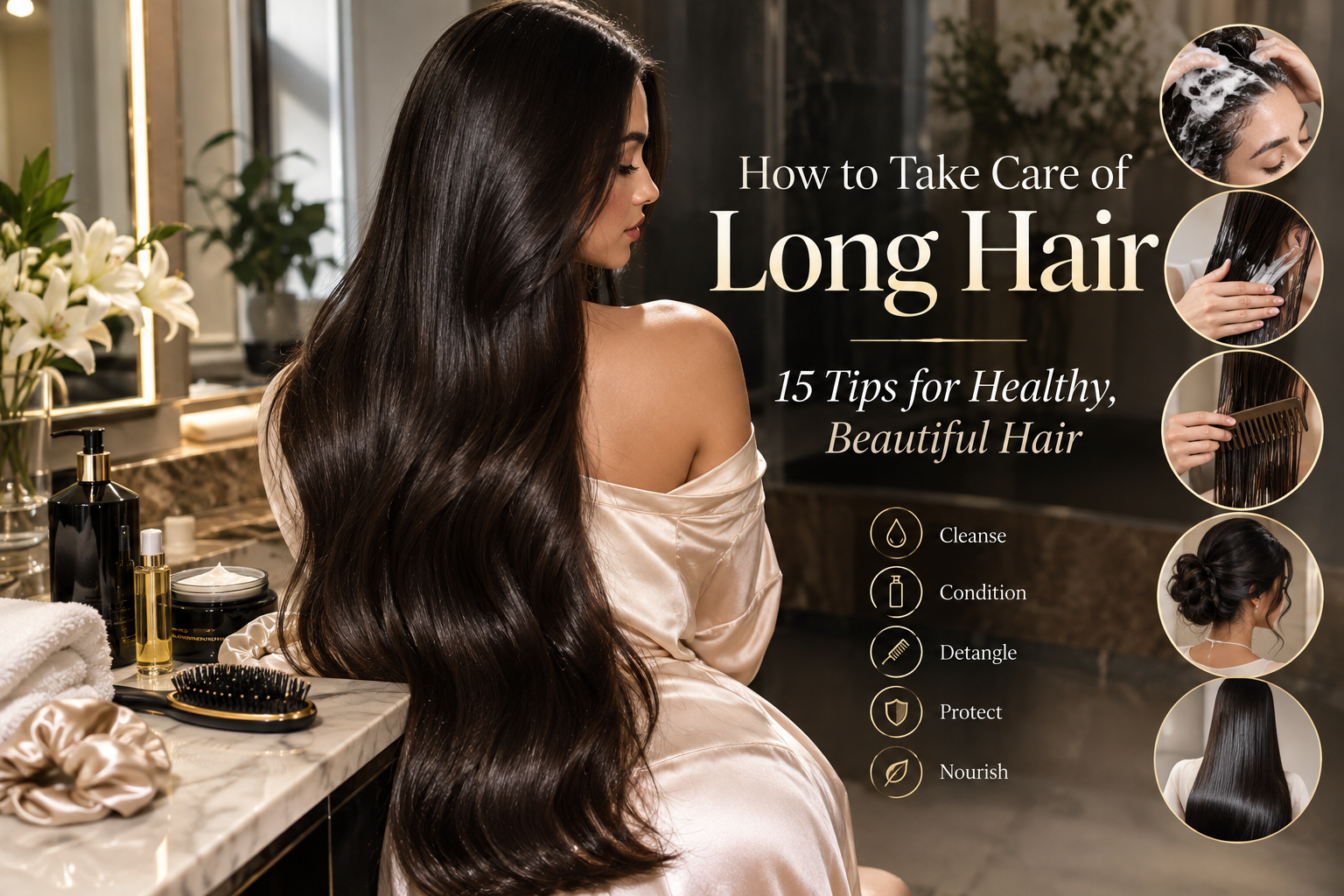
How to Take Care of Long Hair: 15 Tips for Healthy, Beautiful Hair
Long hair can look effortlessly beautiful, but keeping it healthy takes more than simply letting it grow. The longer your hair becomes, the more care it usually needs. The ends have been exposed to brushing, washing, heat, styling, weather, and everyday friction for a longer period of time, which can make them more vulnerable to dryness, split ends, tangles, and breakage.
If you have been wondering how to take care of long hair, the good news is that you do not need a complicated routine or a bathroom shelf full of products. Small changes can make a noticeable difference. Washing your hair properly, conditioning regularly, detangling gently, reducing unnecessary heat, and protecting your ends can all help your hair stay smoother and stronger. If you enjoy learning practical beauty advice from a professional perspective, you can also explore our Confessions of a Cosmetologist guide for more helpful salon-inspired tips. And for a little beauty inspiration beyond hair care, our Forest Green Nails ideas are worth checking out when you want to refresh your overall beauty look.
The American Academy of Dermatology recommends choosing hair products based on your hair type, washing according to how oily or dirty your scalp becomes, applying shampoo primarily to the scalp, conditioning after shampooing, and handling wet hair gently.
Here are practical long hair care tips you can actually use in your everyday routine.
1. Understand Your Long Hair Care Needs
Before changing your routine, pay attention to your hair.
Long hair can be straight, wavy, curly, coily, fine, thick, dry, oily, color-treated, or a combination of several characteristics. A routine that works beautifully for someone with fine, straight hair may leave thick, curly hair feeling dry or tangled.
Start by asking yourself a few simple questions:
- Does your scalp become oily quickly?
- Are your ends dry?
- Does your hair tangle easily?
- Do you regularly use a flat iron or curling iron?
- Is your hair colored or chemically treated?
- Is your hair naturally curly or textured?
- Do you notice frequent breakage or split ends?
Once you understand your hair, choosing products becomes much easier.
You do not need to follow every hair trend you see online. Your routine should solve your hair’s actual problems rather than add unnecessary steps.
 2. Choose the Right Washing Routine for Long Hair
One of the biggest mistakes people make with long hair is assuming that everyone should wash on the same schedule.
Your scalp should determine how often you shampoo. If your scalp becomes oily quickly, you may need to wash more frequently. If your hair is dry, thick, curly, or textured, you may need less frequent washing. The American Academy of Dermatology recommends adjusting your washing routine according to how dirty or oily your hair becomes.
When shampooing, focus primarily on your scalp instead of aggressively rubbing shampoo through the entire length of your hair.
Your scalp produces oil, collects sweat, and can accumulate styling products. Cleaning the scalp removes that buildup while allowing the shampoo that rinses down the hair to cleanse the lengths without unnecessary friction.
This simple change can make your long hair feel less dry.
3. Make Conditioning Part of Your Long Hair Routine
If you want healthy-looking long hair, conditioner should be one of the most consistent parts of your routine.
Shampoo cleanses the scalp and hair, while conditioner helps make the strands easier to manage. It can also make detangling easier, which means you may pull and break fewer strands while brushing.
For fine or straight hair, concentrate conditioner on the mid-lengths and ends. If your hair is dry or curly, you may benefit from conditioning more of the length.
A simple technique is to squeeze excess water from your hair after shampooing, apply conditioner from the mid-lengths toward the ends, and gently work it through with your fingers.
Let it sit for the recommended amount of time before rinsing.
Your ends generally need more attention than your roots because they are older and have experienced more daily wear.
4. How to Care for Long Hair When It Is Wet
Wet hair deserves special treatment.
After washing, avoid aggressively rubbing your hair with a regular towel. Rough towel drying creates friction and can contribute to damage.
Instead, gently squeeze out excess water and wrap your hair in a soft towel or T-shirt.
When detangling, use a wide-tooth comb and work slowly from the ends upward. The American Academy of Dermatology recommends gentle handling because wet hair can break more easily; the ideal timing for combing can also vary according to hair texture.
Think of detangling as removing knots rather than fighting them.
If you encounter a stubborn knot, stop pulling. Add a little conditioner or leave-in product and gently separate the strands with your fingers first.
5. Detangle Long Hair From the Ends Up
This small habit can completely change the way you brush long hair.
Instead of starting at your roots and dragging a brush through every knot, divide your hair into manageable sections.
Start at the bottom few inches.
Remove the tangles there, then gradually move higher. Continue until you can smoothly comb from the roots through the ends.
This prevents a small knot near the bottom from turning into a larger knot as you pull through it.
The goal is not to brush your hair as many times as possible. In fact, dermatologists advise against excessive brushing because unnecessary brushing can contribute to split ends and breakage.
6. Use Leave-In Care for Healthy Long Hair
Long hair often benefits from an additional layer of conditioning, especially when the ends become dry, tangled, frizzy, or difficult to manage.
A lightweight leave-in conditioner can make hair easier to comb and style. The American Academy of Dermatology notes that leave-in conditioners can be particularly helpful for long, dry, curly, color-treated, heat-styled, or tangled hair.
Apply a small amount to damp hair, concentrating on the mid-lengths and ends.
Do not assume that more product means better results. Start with a small amount and add more only if your hair actually needs it.
Fine hair may become weighed down by heavy leave-in products, while thick or very dry hair may need a richer formula.
7. Protect Long Hair From Heat Damage
Heat styling can make long hair look polished in minutes, but frequent high heat can leave the strands dry and fragile.
Flat irons, curling irons, hot combs, and blow dryers can all contribute to damage when used excessively.
If you use heat, try to:
- Use a heat protectant designed for your hair.
- Choose a low or medium temperature when possible.
- Avoid repeatedly passing a hot tool over the same section.
- Let your hair partially air-dry before blow-drying when practical.
- Give your hair regular breaks from hot styling.
The American Academy of Dermatology recommends limiting excessive heat and using low or medium settings to help reduce damage.
You do not have to give up your favorite blowout or curls. The key is to make heat styling a thoughtful part of your routine instead of an automatic daily habit.
8. Give Your Long Hair Ends Extra Attention
When people talk about long hair, they often focus on the roots and scalp because that is where new hair grows.
But if your goal is to maintain length, your ends deserve just as much attention.
The ends are the oldest part of your hair. They have experienced months or even years of washing, brushing, styling, sunlight, friction, and environmental exposure.
Keep them conditioned and avoid unnecessary pulling.
If your ends regularly feel rough, dry, or tangled, consider adding a nourishing hair mask or lightweight serum to your routine.
And remember: trimming damaged ends does not make hair grow faster from the scalp. However, removing severely split or damaged ends can help prevent splits from traveling farther up the strand and can make your hair look cleaner and healthier.
9. Choose Gentle Hairstyles for Long Hair Care

Tight ponytails, buns, braids, cornrows, and similar styles can place repeated tension on the hair and scalp. The American Academy of Dermatology warns that hairstyles that continuously pull on the hair can contribute to breakage and, over time, traction-related hair loss.
Try rotating your hairstyles.
One day you might wear your hair loose. Another day, try a relaxed braid. On another day, use a low, loose ponytail.
If a hairstyle hurts, feels excessively tight, or causes tension around your hairline, loosen it.
Beautiful hair should not require discomfort.
10. Protect Long Hair While Sleeping
Your nighttime routine matters more than many people realize.
Long hair can rub against your pillow while you sleep, creating friction and tangles. If your hair is particularly prone to frizz or breakage, consider using a satin or silk pillowcase or wrapping your hair gently before bed.
You can also loosely braid your hair before sleeping if braiding does not create tension or tangling for your hair type.
Avoid going to bed with soaking-wet hair whenever possible. Wet hair is more vulnerable to mechanical damage, and tossing around on a pillow can create unnecessary friction.
A few minutes of nighttime preparation can make your morning routine much easier.
11. Focus on Length Retention for Longer, Healthier Hair
If you want longer hair, it is tempting to buy every product promising dramatic growth.
But growing longer hair is not only about making new hair grow. It is also about keeping the length you already have.
Think of it this way:
Growth + retention = longer-looking hair.
Your scalp naturally produces new hair, but excessive breakage can prevent you from seeing much length over time.
Instead of constantly switching products, focus on consistent basics:
- Keep your scalp clean.
- Condition your hair.
- Detangle gently.
- Reduce unnecessary heat.
- Avoid excessive tension.
- Protect your ends.
- Eat a balanced diet.
- Address persistent scalp or hair concerns with a professional.
If you are experiencing significant or persistent hair loss, it is better to speak with a board-certified dermatologist than to rely on supplements or viral hair-growth claims. The AAD notes that hair loss can have many causes and recommends professional evaluation when hair loss is a concern.
12. Use Hair Masks for Extra Moisture and Softness
A hair mask can be a useful addition when your long hair feels particularly dry or rough.
You do not necessarily need to use one every day. Depending on your hair type and the product, once a week or whenever your hair needs additional conditioning may be enough.
Apply the mask according to its directions, concentrating on areas that feel dry.
If your hair is fine, avoid applying heavy masks directly to the scalp unless the product is specifically designed for scalp use. Your lengths and ends may need conditioning while your roots may not.
Pay attention to how your hair responds rather than following a rigid schedule.
13. Protect Long Hair During Coloring and Chemical Treatments
Coloring, relaxing, perming, and chemical straightening can change the structure and condition of your hair.
That does not mean you cannot color or style long hair. It simply means you should give your hair enough care between treatments.
Try not to stack multiple harsh chemical services too close together. Use conditioning treatments and minimize additional heat when your hair is already feeling fragile.
If your hair suddenly becomes extremely dry, breaks easily, or feels dramatically different after a chemical service, consider giving it a break and consulting a professional stylist or dermatologist if the problem continues.
14. Reduce Everyday Friction to Prevent Long Hair Breakage
Sometimes damage comes from surprisingly ordinary activities.
Your hair may rub against:
- Coat collars
- Scarves
- Backpack straps
- Seat belts
- Sweaters
- Rough towels
- Pillowcases
- Clothing
Long hair moves around a lot during the day, so this repeated friction can contribute to tangling and breakage.
When you are traveling, exercising, or wearing clothing that repeatedly catches your hair, consider putting it into a loose, protective style.
The goal is not to keep your hair perfectly controlled all day. It is simply to reduce unnecessary pulling and friction.
15. Build an Easy Long Hair Care Routine

The best routine is one you can actually maintain.
You do not need ten different products to care for long hair. Start with a simple system and adjust it according to your hair’s needs.
Your Long Hair Wash-Day Routine
A gentle wash day can make a big difference when caring for long hair. Start by shampooing the scalp thoroughly, while avoiding aggressive rubbing through the ends.
After rinsing, apply conditioner mainly to the mid-lengths and ends. Allow it to sit for the recommended time before rinsing thoroughly.
Once the washing is complete, gently squeeze out excess water instead of rubbing the hair with a rough towel. A wide-tooth comb can then help remove tangles, especially when used carefully and according to your hair texture.
For extra moisture and easier styling, apply a small amount of leave-in conditioner to damp hair. Letting your hair air-dry is a gentle option when convenient. If you prefer to blow-dry, use a lower heat setting and avoid holding the dryer too close to your strands.
Finally, a small amount of lightweight serum or hair oil can be applied to the ends if your hair responds well to it. This simple routine helps keep long hair manageable, soft, and easier to style.
Your Daily Long Hair Care Routine
In the morning, gently detangle your hair rather than repeatedly brushing it.
If your hair becomes tangled during the day, work through the knots carefully instead of pulling a brush through them.
If you are going outside for an extended period, consider protecting your hair from intense sun exposure with appropriate hair protection and a hat when practical.
Your Nighttime Hair Care Routine
Gently detangle your hair.
If it tends to tangle while sleeping, loosely braid it or use another comfortable, low-tension style.
Consider a satin or silk pillowcase if friction is a recurring problem.
This routine is simple enough to follow without turning hair care into a full-time job.
Long Hair Care Mistakes to Avoid
Knowing what not to do can be just as important as knowing what to do.
Avoid these common habits:
Rubbing Your Hair Aggressively With a Towel
This creates unnecessary friction. Gently wrap or squeeze your hair instead.
Brushing From the Roots Through a Tangled Length
Start at the ends and gradually work upward.
Using Maximum Heat Every Time
High heat is not necessary for every styling session. Lower temperatures can reduce unnecessary damage.
Wearing Extremely Tight Hairstyles Constantly
Give your scalp and hair a break from repeated tension.
Applying Too Much Product
More product does not automatically mean healthier hair. Too much can leave your hair heavy, greasy, or difficult to manage.
Ignoring Persistent Breakage
If your hair continues to break despite improving your routine, look for the underlying cause rather than simply adding more products.
How to Keep Long Hair Looking Healthy Between Washes
You can keep long hair looking polished without washing it constantly.
A few simple habits can help:
- Brush or comb only when needed.
- Refresh the roots if your hair becomes oily.
- Keep the ends conditioned.
- Avoid excessive dry shampoo buildup.
- Use a small amount of lightweight styling product when needed.
- Choose loose hairstyles on days when your hair feels fragile.
- Protect your hair from unnecessary heat.
Remember that healthy-looking hair does not have to be perfectly smooth every minute of the day.
A little texture, natural movement, and occasional frizz are completely normal.
When to See a Dermatologist About Long Hair Problems

If you notice unusual hair loss, significant thinning, persistent scalp irritation, sudden changes in your hair, or ongoing breakage that does not improve after changing your routine, consider seeing a board-certified dermatologist.
A dermatologist can help determine whether an underlying scalp or health issue is contributing to the problem. The AAD specifically recommends professional evaluation when persistent hair loss is a concern.
Final Thoughts on How to Take Care of Long Hair
Learning how to take care of long hair is less about following a complicated beauty routine and more about being consistent with the basics.
Wash your scalp according to its needs, condition your lengths, treat wet hair gently, detangle from the ends upward, protect your hair from excessive heat, and avoid hairstyles that constantly pull on your strands. Most importantly, pay attention to what your own hair is telling you.
Long, beautiful hair does not happen overnight. It is maintained through hundreds of small choices — being gentle with your strands, protecting your ends, and giving your hair time to stay strong as it grows.
Once those habits become part of your routine, taking care of long hair can become much simpler. You do not need a complicated shelf full of products. You need a routine that fits your hair type, your lifestyle, and the condition of your hair.
And sometimes, the most effective hair-care upgrade is simply being gentler with the hair you already have.


2 Comments