
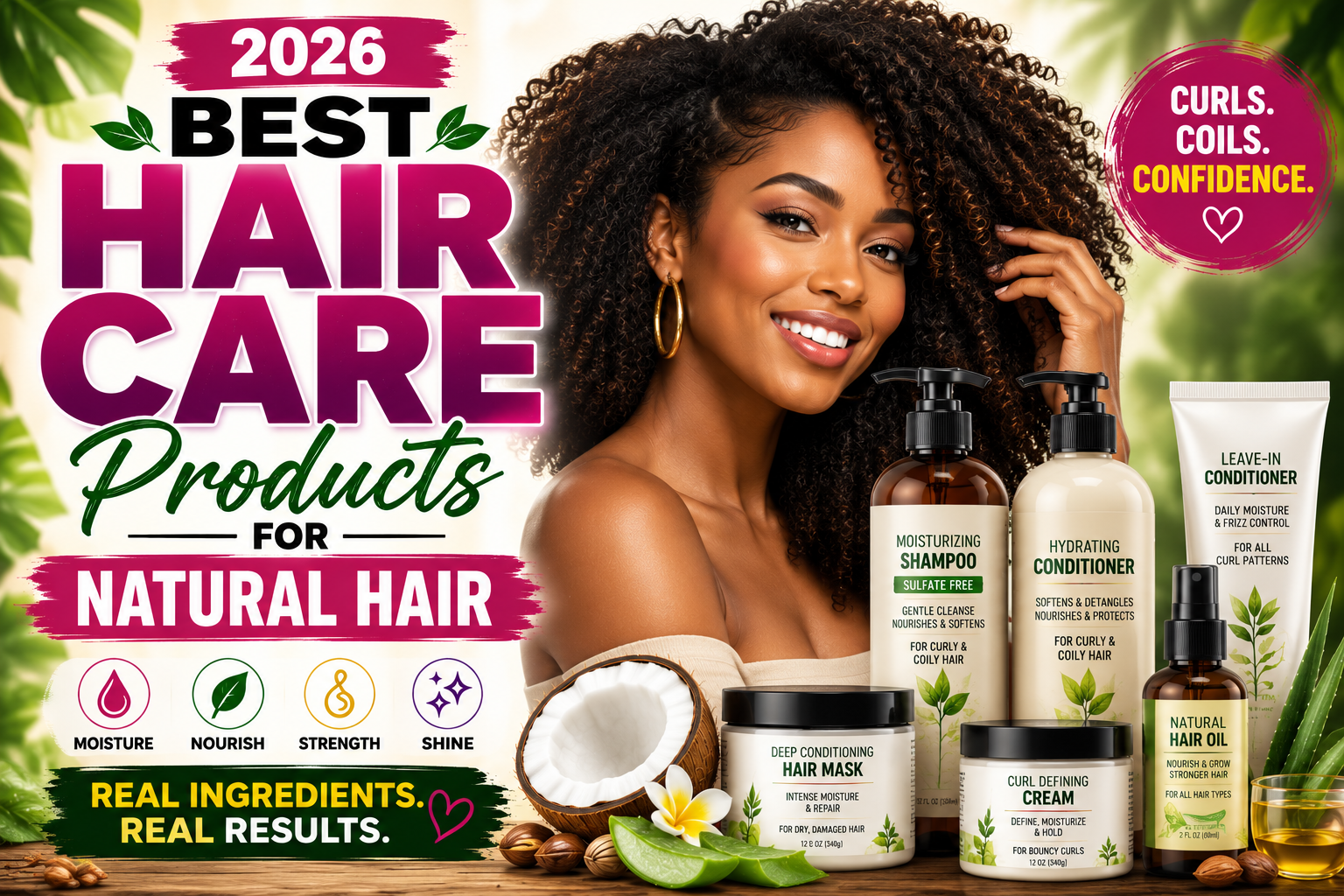
Natural Hair Products: Best Hair Care Guide for 2026
Natural hair is beautiful, versatile, and unique, but it can also need extra moisture and care. Whether you have tight coils, soft curls, waves, or textured hair, choosing the right products can make a noticeable difference in how your hair looks and feels. The best hair care products for natural hair should help maintain moisture, reduce breakage, improve manageability, and support healthy-looking strands.
With so many shampoos, conditioners, oils, creams, masks, and styling products available in the USA, finding the right routine can feel overwhelming. This guide explains what to look for and how to build a simple natural hair routine that works for your hair type.
Why Natural Hair Needs the Right Products
Natural and textured hair can become dry more easily because its curl pattern can make it harder for natural scalp oils to travel down the entire length of the hair. Frequent heat styling, chemical treatments, harsh cleansing products, and environmental factors can also contribute to dryness and breakage.
This is why moisture should be one of the main priorities in a natural hair routine. Look for products designed to cleanse gently while helping your hair retain moisture.
Ingredients such as aloe vera, glycerin, shea butter, jojoba oil, coconut oil, argan oil, and other conditioning ingredients are commonly found in products designed for textured hair. However, every head of hair is different, so it is important to pay attention to how your hair responds to individual products.

How to Choose Hair Care Products for Natural Hair
Before purchasing a product, consider your hair’s texture, porosity, density, and current condition. A product that works beautifully for one person may not produce the same results for someone else.
1. Look for Moisturizing Ingredients
Dryness is one of the most common concerns for natural hair. Moisturizing shampoos, conditioners, leave-in treatments, and creams can help your hair feel softer and easier to manage.
Look for products containing ingredients such as shea butter, aloe vera, jojoba oil, argan oil, or other conditioning ingredients. If your hair becomes weighed down easily, choose lighter formulas instead of very heavy creams and oils.
2. Avoid Excessive Cleansing
Your hair needs to be clean, but washing too frequently with a strong cleanser may leave some natural hair types feeling dry. A gentle shampoo can help remove sweat, buildup, and excess oil while maintaining a comfortable moisture balance.
How often you wash depends on your scalp, lifestyle, hairstyle, and hair type. People who exercise frequently or use many styling products may need to cleanse more often.
3. Consider Your Hair’s Needs
If your main concern is dryness, prioritize moisturizing products. If you experience frequent tangling, look for conditioners with good slip. If your hair feels weak or breaks easily, consider a balanced routine that includes conditioning and occasional strengthening treatments.
Best Shampoo for Natural Hair
A good shampoo is the foundation of a healthy hair routine. For natural hair, consider a gentle formula that cleans your scalp without leaving your hair feeling extremely dry or rough.
When shampooing, concentrate on your scalp rather than aggressively rubbing the lengths of your hair. Allow the cleanser to rinse through the rest of the strands.
If you regularly use gels, edge control, creams, or oils, occasional clarifying may help remove buildup. However, clarifying products should be used according to the product instructions and your hair’s needs.

Best Conditioner for Natural Hair
Conditioner is especially important for curly and oily hair because it can improve softness and manageability. A good conditioner can make detangling easier and help reduce unnecessary pulling on the hair.
Apply conditioner throughout your hair, paying particular attention to the lengths and ends. Allow it to sit for the recommended amount of time before rinsing.
For particularly dry hair, a deep conditioner or hair mask can be added to your routine. Deep conditioning once in a while can provide an extra conditioning step when your hair needs it.
Leave-In Conditioners and Moisturizers
Leave-in conditioners are popular because they provide lightweight conditioning after washing. They can also make styling easier by improving softness and reducing tangling.
If your curls look dull or feel dry between wash days, a suitable leave-in conditioner or moisturizing cream may help refresh them. Start with a small amount. Applying too much product can cause buildup and make your hair feel heavy.
For people with thicker or denser hair, dividing the hair into sections can help distribute products more evenly.
Natural Hair Oils
Hair oils are another common part of natural hair care. Lightweight oils such as jojoba or argan oil may be useful for people who want additional softness and shine.
Oils can also be used as part of a pre-shampoo routine or to help seal in moisture, depending on your hair’s needs and the rest of your routine.
Remember that oil does not replace water-based hydration. If your hair is very dry, applying large amounts of oil alone may not solve the underlying problem. A moisturizing product followed by a suitable oil can be a better approach for some hair types.
Deep Conditioning Treatments
Deep conditioning can be an excellent addition to a natural hair routine. It gives you an opportunity to provide extra conditioning when your hair feels dry, rough, or difficult to manage.
Apply the treatment according to its instructions and make sure it is distributed throughout your hair. Using a wide-tooth comb or your fingers while the hair is properly conditioned can help with gentle detangling.
Avoid aggressive combing, especially when the hair is dry and fragile.

Styling Products for Natural Hair
Natural hair offers countless styling possibilities, including wash-and-go styles, twists, braids, twist-outs, braid-outs, buns, and protective styles.
Choose styling products based on the result you want. Curl creams can help define curls, while gels can provide stronger hold. Styling butters and creams may be useful for twists and other styles that require additional moisture and control.
When trying a new product, begin with a small amount. You can always add more if necessary, but using too much product can lead to buildup.
A Simple Natural Hair Care Routine
You do not need a complicated routine to take good care of natural hair. A simple routine can be easier to maintain consistently.
Step 1: Cleanse your scalp
Use a suitable shampoo when your scalp and hair need cleansing.
Step 2: Condition
Apply a moisturizing conditioner and gently detangle your hair.
Step 3: Deep condition when needed
Add a deep-conditioning treatment when your hair needs additional conditioning.
Step 4: Apply leave-in conditioner
Use a suitable leave-in product to support softness and manageability.
Step 5: Style
Apply your preferred curl cream, gel, butter, or styling product.
Step 6: Protect your hair
Consider low-manipulation styles and nighttime protection, such as a satin or silk scarf or pillowcase, if they work well for you.

Common Natural Hair Care Mistakes to Avoid
Even with good products, certain habits can make natural hair more difficult to manage.
One common mistake is using too much product. More product does not always mean better results. Excessive layering can create buildup and make hair feel heavy.
Another mistake is detangling too aggressively. Natural hair can be fragile, so patience is important. Work in sections and use a suitable conditioner or detangling product when appropriate.
Excessive heat styling can also affect the appearance and condition of hair. If you use hot tools, follow the product’s heat-protection guidance and avoid unnecessary high temperatures.
Finally, do not constantly change your entire routine. Give products reasonable time to show how they work with your hair, unless a product causes irritation or another unwanted reaction.
How to Find the Best Products for Your Hair
There is no single product that is perfect for everyone. The best hair care products for natural hair are the ones that fit your hair’s needs, lifestyle, budget, and styling preferences.
When shopping in the USA, compare ingredient lists, product instructions, reviews, and your own experience. You can also build your routine gradually instead of purchasing many products at once.
Start with the basics: a cleanser, conditioner, leave-in product, and one styling product. Once you understand how your hair responds, you can add a deep conditioner, oil, mask, or other treatment.
Final Thoughts
Taking care of natural hair does not have to be complicated. The key is understanding what your hair needs and choosing products that support those needs. Moisture, gentle cleansing, careful detangling, conditioning, and low-manipulation styling can all be valuable parts of a natural hair routine.
The right hair care products for natural hair can help make wash days easier and styling more enjoyable. Instead of following every new hair trend, focus on consistency and pay attention to how your own hair responds.
With a simple routine and the right products, you can keep your natural curls, coils, and textured hair looking moisturized, manageable, and beautiful throughout the year.

2 Comments