
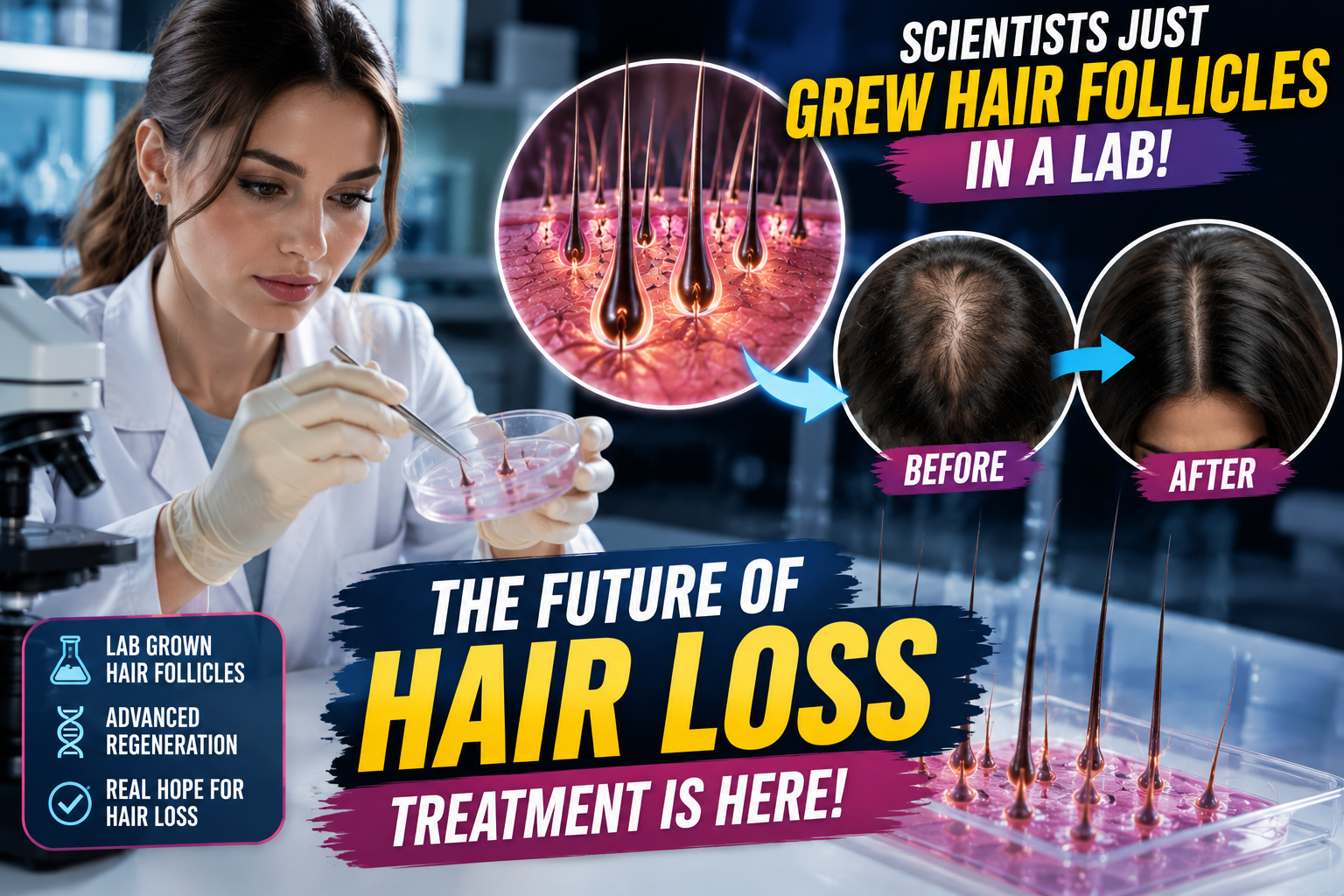
Lab Grown Hair Follicles: A New Hair Loss Breakthrough?
Lab grown hair follicles could represent an exciting new direction in hair-loss research. Scientists are studying how hair follicles develop, regenerate, and potentially restore hair growth, opening new possibilities for future hair-loss treatments. Hair loss has always been one of those problems that seems simple from the outside but is incredibly complicated underneath the skin. Millions of people experience thinning hair, receding hairlines, bald patches, or pattern hair loss, yet creating completely new hair follicles remains one of the biggest challenges in regenerative medicine.
The research is exciting, but it is important to keep the findings in perspective. The breakthrough is promising, but it is still experimental and does not mean a human cure for baldness is currently available. Scientists still need to conduct more research and testing before this approach could potentially become a treatment for people.
Now, scientists are exploring a fascinating possibility: building or regenerating hair follicles rather than simply trying to protect the follicles a person already has.
Recent research has made the subject even more exciting. Scientists are studying how hair follicles develop, how their stem cells behave, how surrounding tissues influence growth, and whether dormant follicles can potentially be reactivated. The science is still experimental, but the direction is remarkable. Could the future of hair restoration involve growing new follicles instead of simply moving existing hair? Let’s take a closer look.
1.Why Lab Grown Hair Follicles Matter
Every strand of hair begins inside a tiny structure called a hair follicle. The follicle sits inside the skin and contains a complex collection of cells that work together to produce hair. It isn’t simply a small hole where a strand grows. It is a living biological structure with its own growth cycle.
Hair follicles repeatedly move through different stages, including periods of active growth and rest.
When follicles become progressively smaller or stop producing visible hair, thinning can occur.
Researchers therefore believe that understanding the follicle itself could be the key to developing better approaches to hair loss.
Instead of only asking, “How can we make hair grow faster?” scientists are increasingly asking a much bigger question:
Can we restore the biological machinery that produces hair?
That shift is one reason hair-regeneration research has become so interesting.
2. How Scientists Are Developing Lab Grown Hair Follicles
One of the most exciting areas of research involves understanding how hair follicles naturally develop.
A 2026 study published in Nature Communications investigated male androgenetic alopecia using single-cell and spatial transcriptomics. Researchers identified changes in follicular cells, stem-cell behavior and communication between different cell populations. Their experiments also suggested that abnormal contraction around follicles may contribute to impaired hair growth.
This is important because scientists are learning that hair loss isn’t necessarily caused by one simple switch.
Multiple biological processes can interact.
The follicle, surrounding tissue, stem cells and signaling pathways can all influence whether a follicle remains productive.
Understanding these interactions could eventually help researchers develop more targeted treatments.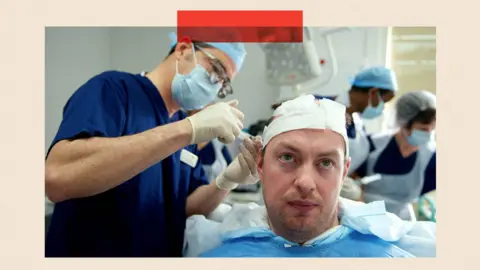
3. The Fascinating Idea of Lab-Grown Hair Follicles
The phrase “lab-grown hair follicles” sounds almost like science fiction.
But researchers are genuinely investigating ways to recreate the biological environment required for follicle development.
Scientists can study follicle-like structures in laboratory systems called organoids or other engineered models. These models allow researchers to observe how cells communicate and organize themselves.
A 2026 Scientific Reports study investigated hair-follicle organoids and found that certain compounds could promote elongation of hair-peg-like structures through biological signaling involving oxytocin.
That does not mean scientists have created a ready-to-use cure for baldness.
Instead, it demonstrates something potentially valuable: researchers are learning how to manipulate the biological signals involved in follicle development.
And that knowledge could help future regenerative treatments.
4. The Science Behind Lab Grown Hair Follicles
This is where things get really interesting.
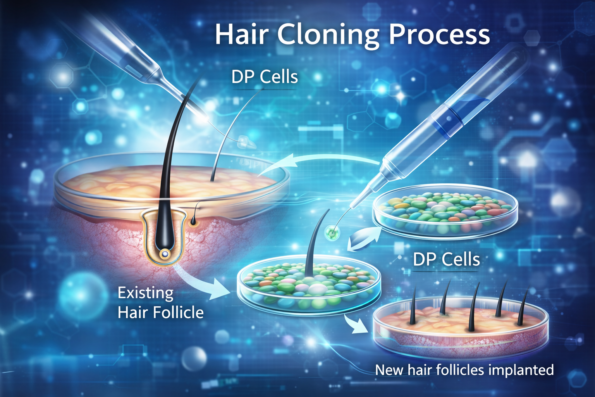
Imagine a future treatment in which scientists could take a person’s own cells, use them to create functional follicle structures, and then introduce those follicles into areas affected by hair loss.
In theory, such an approach could be very different from conventional hair restoration.
Instead of transferring a limited number of existing follicles, regenerative medicine could eventually aim to create new follicular structures.
However, this remains a major scientific challenge.
Researchers would need to control:
- Where the new follicles develop
- Their direction and angle
- Their growth cycle
- Their size
- Their ability to produce hair
- Their interaction with surrounding tissue
- Their long-term stability
- Their safety
Even if scientists can create follicle-like structures in a laboratory, translating that achievement into a safe human treatment is a much bigger step.
 5. Another Major Direction: Waking Up Dormant Follicles
Creating new follicles isn’t the only exciting strategy.
Scientists are also investigating whether some follicles that appear inactive can be reactivated.
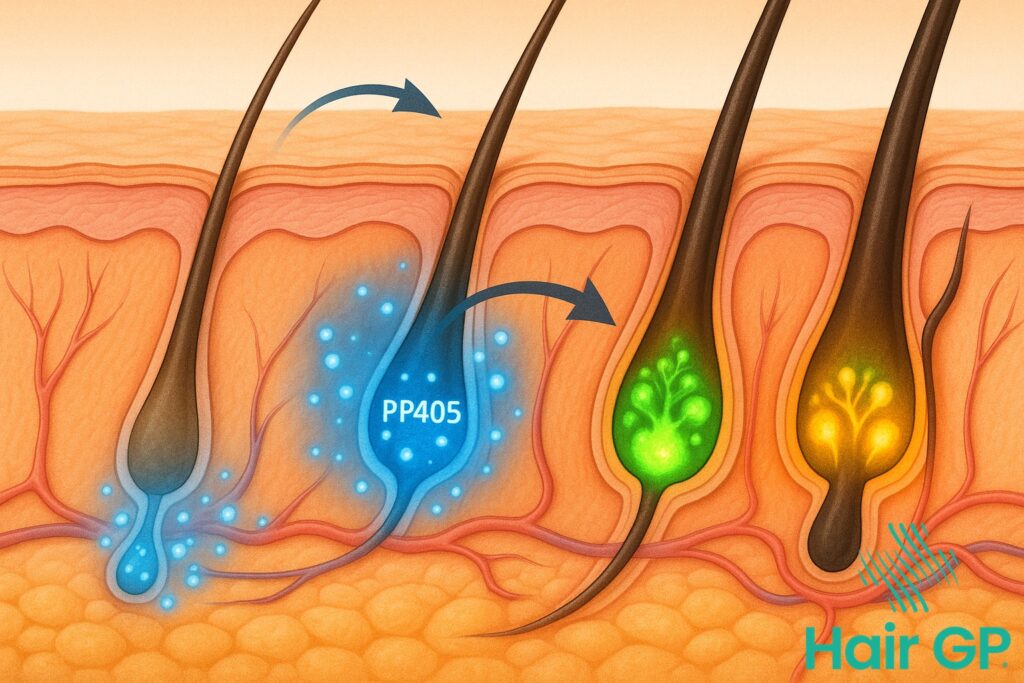
One example is the experimental treatment PP405, which is being developed to target dormant hair-follicle stem cells.
According to Pelage Pharmaceuticals, its Phase 2a study met its primary safety endpoint. The company reported that, among men with a higher degree of hair loss, 31% of participants receiving PP405 experienced more than a 20% increase in hair density at week eight, compared with 0% in the placebo group.
That’s certainly an interesting result.
But there is an important detail that shouldn’t be missed.
PP405 is still an investigational drug.
It has not been approved by the FDA for commercial sale, so these results should not be interpreted as proof that a new hair-loss cure is already available.
6. Why Stem Cells Are Getting So Much Attention
Hair-follicle stem cells are extremely important because they help maintain the follicle’s ability to regenerate during its normal growth cycle.
Researchers are studying what causes these cells to become active or remain dormant.
If scientists can understand those signals, they may be able to develop treatments that influence follicular activity.
This could potentially provide a completely different approach to hair loss.
Rather than simply masking thinning hair or relying on existing follicles, future treatments could focus on regenerative biology.
That is why terms such as “stem cells,” “follicle regeneration” and “hair organoids” are becoming increasingly common in scientific hair research.
7. What Makes This Research Different From a Hair Transplant?
A traditional hair transplant works by moving existing hair follicles from one part of the scalp to another.
It can be an effective procedure for appropriate candidates, but there is a fundamental limitation:
You are working with the follicles that already exist.
Regenerative hair research has a different goal.
Scientists are exploring whether biological techniques could eventually help regenerate, reactivate or create follicular structures.
If successful, that could potentially expand the possibilities of hair restoration.
But it is important not to confuse experimental research with an available clinical procedure.
We are not at the point where someone can walk into a clinic and order unlimited lab-grown hair follicles.
8. Scientists Still Have Big Problems to Solve
The exciting headlines shouldn’t make us forget how complicated this technology is.
A successful human treatment would need to meet strict safety requirements.
Scientists would need to know whether regenerated follicles continue functioning for years.
They would also need to determine whether the follicles behave naturally and whether they can produce normal-looking hair.
Another challenge is control.
Hair follicles aren’t randomly positioned. Their direction, spacing and growth patterns contribute to the appearance of natural hair.
Creating follicles that simply produce hair isn’t necessarily enough.
Researchers would need to understand how to produce follicles that behave correctly.
9. Could This Actually Become a Hair-Loss Cure?
Maybe—but it is far too early to say that it will.
This distinction is extremely important.
Research showing promising biological results is not the same thing as an approved medical treatment.
Some laboratory discoveries never become successful human therapies.
Others take many years of testing before reaching patients.
For that reason, headlines claiming that scientists have already “cured baldness” would be misleading.
A more accurate statement is:
Scientists are making important progress toward understanding and potentially regenerating the biology behind hair growth.
That is already exciting enough.
10. The Future of Hair Restoration Could Look Very Different
Imagine a future where hair restoration isn’t primarily about choosing between medications and transplantation.
Instead, doctors could potentially evaluate the condition of a person’s follicles and use regenerative techniques to stimulate dormant cells or replace damaged follicular structures.
That future isn’t here yet.
But current research is moving toward a more sophisticated understanding of hair biology.
A 2026 Nature Communications study, for example, identified specific cellular and mechanical processes associated with follicle miniaturization in androgenetic alopecia.
Other researchers are studying follicle organoids, stem cells, signaling pathways and tissue engineering.
Each discovery adds another piece to the puzzle.
11. What Should People With Hair Loss Do Right Now?
While experimental science is exciting, people experiencing significant hair loss shouldn’t wait for a futuristic treatment before seeking professional advice.
Hair loss can have many causes.
Pattern hair loss, nutritional deficiencies, hormonal changes, certain medications, autoimmune conditions and other factors can produce different symptoms.
A dermatologist or qualified healthcare professional can help identify the likely cause.
Current treatment options should be discussed according to the individual’s situation rather than relying on viral social-media claims about miracle products.
And importantly, experimental treatments should never be purchased or used simply because an online article describes promising research.
12. The Most Exciting Question Is Still Unanswered
The biggest question isn’t whether scientists can learn more about hair follicles.
They clearly can.
The bigger question is whether researchers can eventually turn this growing knowledge into a safe, reliable and scalable human treatment.
If they can, the consequences could be enormous.
Hair restoration might eventually move beyond simply preserving existing follicles.
It could become a form of regenerative medicine.
Instead of asking how to hide hair loss, researchers could potentially focus on rebuilding the biological structures responsible for producing hair.
That would represent a major change in the field.
Final Thoughts
The idea of lab grown hair follicles sounds like something from a futuristic movie, but the underlying science is very real.
Researchers are studying follicle development, stem cells, organoids, tissue interactions and biological signaling in an effort to understand why hair follicles stop functioning and how their activity might be restored.
At the same time, experimental treatments such as PP405 are exploring whether dormant follicular stem cells can be reactivated. Early clinical results are interesting, but the treatment remains investigational and requires further clinical development.
So, is baldness already cured? No.
Could the science eventually change how we treat hair loss?
Absolutely possible.
And that is what makes this one of the most fascinating areas of modern hair research.
The future may not simply be about saving the hair follicles we have.
It may one day be about learning how to rebuild them.





2 Comments