
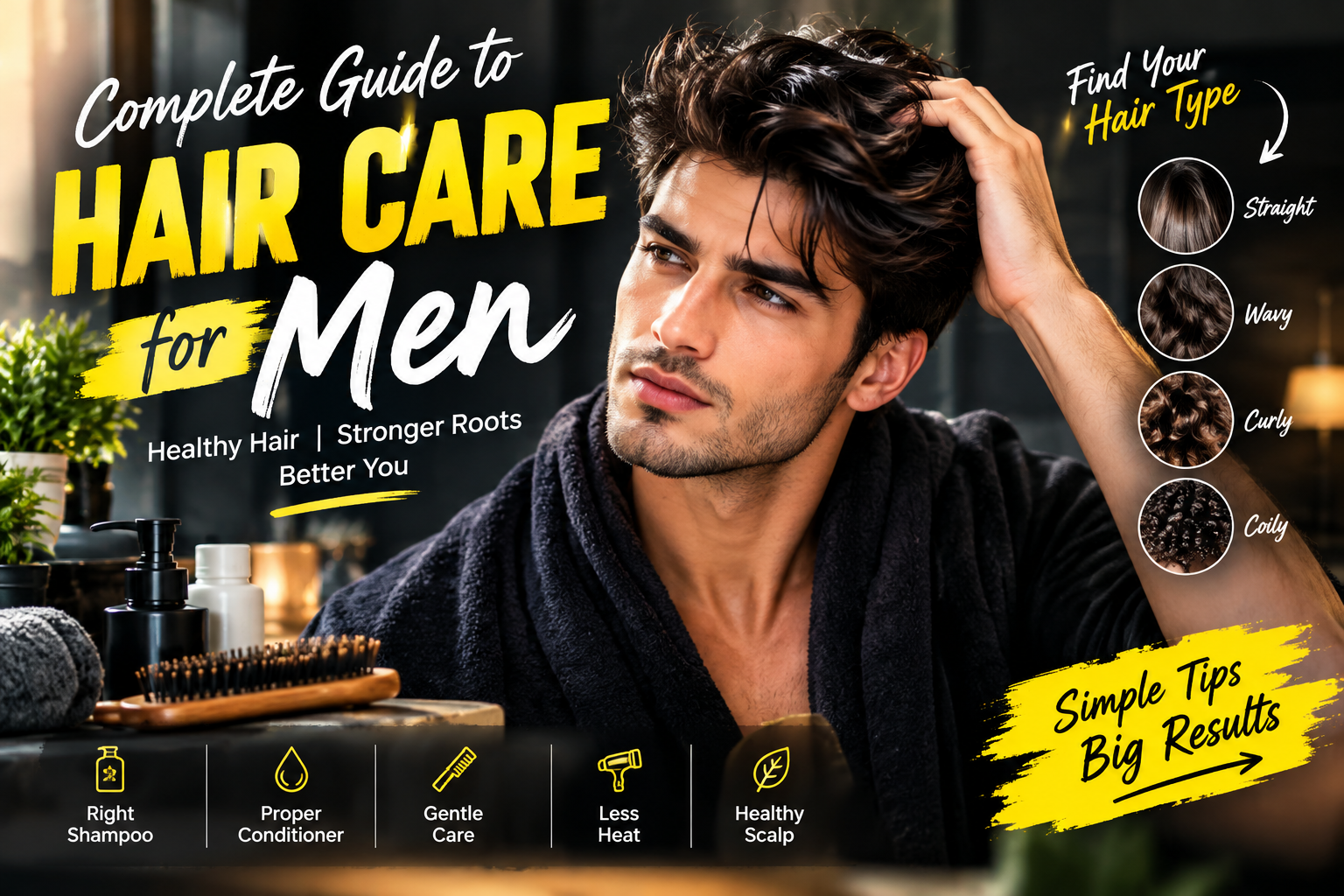
Hair Care for Men: The Complete Guide to Healthier Hair
Good hair care for men does not need to be complicated. A simple routine can keep your hair clean, manageable, and healthy-looking without requiring dozens of expensive products. Just as a few smart nail care tips can help maintain a polished look, consistent hair-care habits often matter more than having a large collection of treatments.
Every man’s hair has different needs. Straight, wavy, curly, coily, fine, thick, and coarse textures can respond differently to shampoos, conditioners, styling products, and heat. Scalp condition also plays an important role in overall comfort and manageability. For a complete grooming routine, you can also explore practical makeup hacks that make everyday beauty routines easier and more effective.
For most men, an effective routine can focus on a few essentials. Cleanse the scalp, condition the hair when needed, handle wet strands gently, limit unnecessary heat, and select products that match your texture. Over time, these simple steps can make hair care for men much easier to maintain.
Why Hair Care for Men Matters
Men’s grooming involves more than getting a regular haircut. Natural scalp oil helps protect the skin and hair, while sweat, dirt, dead skin cells, and styling products can collect throughout the day.
Excess buildup may leave the scalp feeling greasy or uncomfortable. On the other hand, harsh products and overly frequent washing can make the hair feel dry, rough, or difficult to style.
Healthy-looking hair begins with attention to both the scalp and the strands. Once you understand what your hair needs, choosing suitable products becomes much easier.
 Hair Care for Men Starts With Knowing Your Hair Type
Before buying another shampoo or styling product, take some time to identify your hair texture and scalp type.
Common hair textures include:
- Straight
- Wavy
- Curly
- Coily or tightly textured
- Fine
- Medium
- Coarse
- Thick
- Thin
Scalp type matters as well. Some men naturally have oily scalps, while others experience dryness or a combination of oily roots and dry ends.
Knowing these differences can help you create a hair care routine for men that fits your lifestyle, texture, and grooming preferences.
Hair Care for Men With Straight Hair
Straight strands often allow natural scalp oils to move down the hair more easily. As a result, oily roots can become noticeable sooner.
Men with oily scalps may prefer washing more frequently. A lightweight shampoo can remove excess oil while helping the hair avoid an overly stripped feeling.
Hair Care for Men With Wavy Hair
Wavy hair sits between straight and curly textures, so moisture balance can be especially important. Natural waves usually need enough hydration without excessive weight.
Heavy formulas may flatten the movement of the waves. Meanwhile, insufficient moisture can make frizz more noticeable. Lightweight conditioner and a small amount of styling cream can help maintain the natural pattern.
Hair Care for Men With Curly or Coily Hair
Curly and coily textures often benefit from additional moisture. Because the strands bend and curve, natural scalp oils may have more difficulty traveling along the full length.
Regular conditioning can improve softness and manageability. Gentle detangling also matters because forceful brushing can create unnecessary pulling and breakage.
How Often Should Men Wash Their Hair?
No single washing schedule works for every man. Factors such as scalp oiliness, exercise, sweat, hair texture, hairstyle, product use, and daily activities can all affect your ideal routine.
Someone who exercises frequently may need to cleanse the scalp more often. By comparison, dry, curly, or textured hair may feel better with more time between washes.
Instead of copying another person’s schedule, pay attention to your own scalp and hair. Greasiness, dryness, buildup, and overall comfort can provide useful clues.

The Best Hair Care for Men Starts With Proper Shampooing
Shampooing may seem simple, but technique still makes a difference. Start by thoroughly wetting the hair with lukewarm water.
Next, apply shampoo mainly to the scalp rather than concentrating it on the ends. Massage gently with your fingertips to loosen oil, sweat, dirt, and styling-product residue.
Fingernails are not necessary for cleansing. A gentle fingertip massage can clean the scalp without adding excessive friction.
After cleansing, rinse thoroughly and allow the water to carry remaining shampoo through the lengths. Aggressive scrubbing of the hair itself is generally unnecessary.
Conditioner Is an Important Part of Men’s Hair Care
Many men focus heavily on shampoo while forgetting conditioner. That approach can leave dry, rough, tangled, or difficult-to-style hair without enough moisture and smoothness.
Conditioner can improve softness and make detangling easier. Fine or straight hair may need product mainly through the mid-lengths and ends, while thicker or curly textures may benefit from broader coverage.
Choose a formula based on how your hair feels after washing. The goal is manageable hair without an unnecessarily heavy or greasy finish.
Gentle Hair Care for Men With Wet Hair
Wet strands need gentle handling because rough treatment can contribute to unnecessary damage. Extra care immediately after washing can make a noticeable difference.
After a shower, avoid vigorously rubbing the hair with a towel. Instead, gently pat or squeeze away excess water.
A wide-tooth comb can help when detangling is necessary. Begin at the ends and gradually move toward the roots to reduce pulling on knots.
Curly or thick hair may be easier to detangle while conditioner is still present. Using this approach can reduce friction and make the process more comfortable.
How to Choose Men’s Hair Care Products
An extensive product collection is not necessary for everyday grooming. Start with shampoo, conditioner, and a styling product if your hairstyle requires one.
Additional products can be introduced according to your texture, styling goals, and preferred finish.
Popular men’s hair products include:
- Hair clay
- Pomade
- Wax
- Styling cream
- Gel
- Mousse
- Styling spray
- Leave-in conditioner
Product choice should depend on the result you want. Lightweight cream may suit someone seeking a natural finish, while a structured hairstyle might require stronger hold.
Hair Care Products for Fine Hair
Fine hair can become weighed down quickly. Lightweight creams, sprays, and small amounts of styling products may therefore work better than heavy formulas.
Begin with a tiny amount and increase it only when necessary. This method can preserve movement while reducing the chance of a greasy or flat appearance.
Hair Care Products for Thick Hair
Thick hair may need additional control when creating structured hairstyles. Stronger styling products can provide more hold and shape.
Too much product, however, can create buildup. Excess residue may also make the hairstyle appear heavy or greasy.
Hair Care Products for Curly Hair
Curly hair commonly benefits from moisture and definition. A curl cream or lightweight leave-in conditioner can help enhance the natural curl pattern.
Keep the amount moderate because excessive product may make curls stiff, sticky, or weighed down. Gradual experimentation can help you find an amount that provides definition without reducing movement.
Heat Protection Is Essential for Healthy Men’s Hair
Heat styling can create a polished appearance, but excessive heat may contribute to hair damage. Using the right technique can help reduce unnecessary exposure.
A blow dryer does not have to be avoided completely. Lower or medium heat settings, combined with continuous movement, can reduce prolonged exposure to intense heat.
For men who regularly use heated styling tools, a suitable heat-protective product may also be useful. Follow the product instructions carefully for proper application.
Avoid Tight and Aggressive Hairstyles
Repeated pulling can place unnecessary stress on the hair. Tight hairstyles, aggressive brushing, and constant tension around the same areas can make hair more vulnerable to damage.
Particular attention may be useful around the hairline and temples when a hairstyle repeatedly pulls the hair backward or keeps it tightly secured.
Comfort should remain part of your styling routine. A hairstyle that looks polished should not require constant pulling or aggressive handling.
Hair Care for Men With Long Hair
Long hair needs additional attention because there is more length to protect. Regular conditioning can help keep longer strands softer and easier to manage.
When removing tangles, start at the ends and gradually work upward. Beginning at the roots can pull knots downward and create unnecessary tension.
Towel drying also deserves attention after washing. Gently squeeze out excess water instead of aggressively rubbing the hair.
Regular trims can help remove damaged ends and maintain a neat appearance. Keep in mind that trimming the ends does not make hair grow faster from the scalp.

Hair Care for Men With Short Hair
Short hair may require less styling time, but scalp care remains important. Flakes, dryness, redness, and product buildup can sometimes become more noticeable with shorter hairstyles.
Keeping the scalp clean and using styling products in moderation can help maintain a fresh appearance. Fades, buzz cuts, textured crops, and other short styles can look polished when the hair and scalp are properly cared for.
Hair Care for Men With Thinning Hair
Hair thinning can have several possible causes, so changing shampoo alone may not address the underlying issue. A persistent change in hair density deserves attention rather than relying only on cosmetic products.
Changes such as a widening part, receding hairline, bald patches, reduced density, or unusually heavy shedding are worth discussing with a dermatologist.
Gentle grooming can be useful while determining the cause. Avoid aggressive brushing, unnecessary heat, and products that promise dramatic hair growth without appropriate evidence.
Shampoo can support normal cleansing and scalp care, but it should not automatically be considered a treatment for every form of hair loss.
Scalp Care for Men
A healthy-looking hairstyle starts with a well-cared-for scalp. Regular cleansing can remove excess oil, sweat, dirt, and styling-product buildup.
Harsh products or excessive scrubbing may irritate the skin, so a gentle approach is preferable. Pay attention to changes that continue despite regular care.
Possible signs that deserve attention include:
- Persistent itching
- Excessive flakes
- Redness
- Irritation
- Pain
- Unusual bumps
- Changes in hair shedding
Dandruff shampoos containing suitable active ingredients may help with some cases of dandruff. Persistent or severe symptoms, however, may require professional evaluation to identify the cause.
Sun Protection and Men’s Hair Care
The scalp can receive considerable sun exposure, particularly when the hair is very short or thinning. Extra protection becomes useful during extended outdoor activities.
Long periods in the sun can leave exposed scalp skin vulnerable to sun damage. Wearing a hat with good coverage is a simple way to protect the scalp during longer periods outside.
Men with noticeable thinning may need to pay particular attention to scalp protection because less hair is available to provide physical coverage.
Nutrition and Hair Care for Men
Healthy hair care involves more than products applied to the scalp and strands. The body needs adequate nutrition to support normal hair growth and overall health.
A balanced diet containing sufficient protein and a variety of nutrient-rich foods provides a sensible foundation. Restrictive eating patterns may make it harder to obtain all the nutrients the body needs.
Taking several supplements at random is not necessarily helpful. Certain nutrients can cause problems when consumed in excessive amounts, so significant or sudden hair loss is better discussed with a healthcare professional.

Common Hair Care Mistakes Men Should Avoid
Everyday grooming mistakes can affect how clean, smooth, and manageable your hair feels. Fortunately, many of these habits are easy to change.
Washing Hair With Extremely Hot Water
Extremely hot water can leave the hair and skin feeling dry. Lukewarm water is generally a more comfortable choice for regular washing.
Using Too Much Shampoo
Extra shampoo does not automatically make hair cleaner. A small amount can be enough when the product is applied mainly to the scalp and rinsed thoroughly.
Skipping Conditioner
Dry or difficult-to-manage hair may benefit from regular conditioning. Adding conditioner can improve softness and make detangling easier.
Rough Towel Drying
Aggressive towel rubbing can contribute to frizz and unnecessary friction. Patting or gently squeezing the hair provides a softer approach after washing.
Using Too Much Styling Product
Heavy product buildup can make hair appear greasy and difficult to manage. Begin with a small amount and add more only when your hairstyle needs additional hold.
Using Excessive Heat
Frequent high-heat styling can contribute to damage. Lower settings and shorter exposure times are generally preferable when using a blow dryer or heated styling tool.
Brushing Too Aggressively
Forceful brushing is rarely necessary for everyday grooming. Gentle movements can help style and detangle the hair while reducing unnecessary pulling.
A Simple Hair Care Routine for Men
An effective routine can remain short and practical. The following steps can help organize everyday grooming.
Step 1: Start by shampooing your scalp according to how oily, sweaty, or dirty it becomes.
2: When your hair feels dry or difficult to manage, add conditioner for extra softness.
3: After washing, gently pat or squeeze your hair to remove excess water instead of rubbing it roughly.
4: If detangling is needed, reach for a wide-tooth comb and work gradually from the ends upward.
5: For styling, use a small amount of product only when your desired hairstyle calls for it.
6: While blow-drying, choose moderate heat and keep the dryer moving to avoid concentrating heat in one area.
7: Over time, pay attention to changes in your scalp, hair density, and shedding.
Consistency matters more than owning a large collection of products. Even a routine that takes only a few minutes can provide practical everyday hair care for men.
When Should Men See a Dermatologist?
Some hair and scalp concerns require more than improved grooming habits. Professional evaluation may be appropriate when unusual or persistent changes appear.
Consider speaking with a dermatologist if you notice:
- Sudden or significant hair loss
- Bald patches
- Rapid changes in hair density
- Persistent scalp itching
- Severe or recurring dandruff
- Painful scalp areas
- Redness or inflammation
- Sores or unusual scalp changes
A dermatologist can examine the scalp and hair, consider possible causes, and recommend appropriate treatment when necessary.

Final Thoughts on Hair Care for Men
Good hair care for men does not have to be expensive, complicated, or time-consuming. A few practical habits can make everyday grooming easier.
Start by learning your hair type and scalp needs. From there, choose suitable cleansing and conditioning products, handle wet hair gently, and limit unnecessary heat.
Curly textures may need more moisture, while fine hair can often benefit from lightweight products. Oily scalps may require more frequent cleansing, whereas dry or textured hair may feel better with a gentler schedule.
Your routine should also fit your lifestyle. Copying another person’s grooming habits may not produce the same results because hair texture, scalp condition, hairstyle, and daily activities vary.
Small changes can become useful habits when they are repeated consistently. Keeping the routine simple may also make it easier to follow over the long term.
Sudden hair loss, persistent scalp problems, or unusual changes deserve professional attention rather than relying only on cosmetic products.
Ultimately, a useful hair care routine for men should match your hair, scalp, lifestyle, and grooming goals while remaining simple enough to maintain consistently.
2 Comments