

Beauty Tips: 25 Secrets for Glowing Skin & Hair
Looking beautiful does not have to mean spending hours in front of the mirror or buying every new product that appears on social media. The best beauty tips are often surprisingly simple: take care of your skin, understand your hair care needs, use makeup strategically, keep your beauty tools clean, and build routines that you can actually maintain.
Beauty also looks different from person to person. Someone may love a full-glam makeup look, while someone else feels most confident wearing moisturizer, mascara, and lip balm. The goal is not to follow every trend. It is to find practical beauty tips that help you look polished while still feeling like yourself.
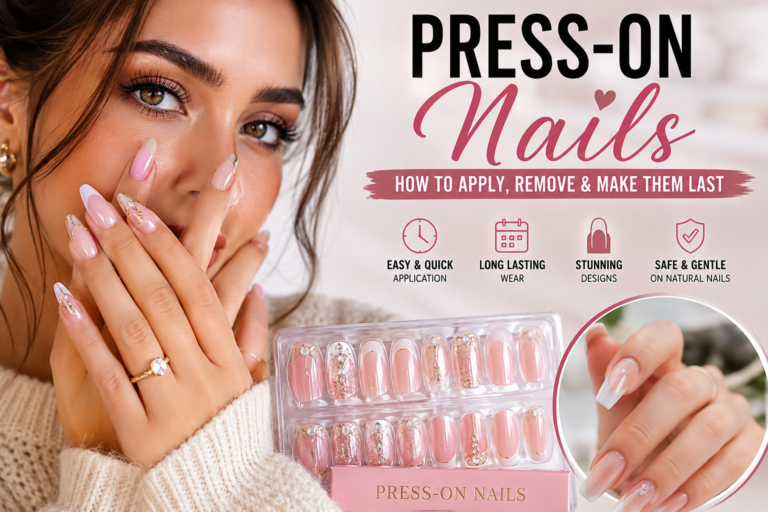
Whether you are creating a new beauty routine or looking for easy ways to improve your everyday appearance, these beauty tips can help you make smarter choices for your skin, hair, makeup, and nails. If you love keeping your manicure polished, you can also explore gold French tip nails for an elegant and timeless look.
1. Beauty Tips for Understanding Your Skin
One of the biggest beauty mistakes is buying products before understanding your skin.
Skin can be dry, oily, combination, normal, or sensitive, and your needs may change with the weather, lifestyle, and products you use.
If your skin often feels tight after cleansing, you may need more hydration. If your T-zone becomes shiny quickly, lightweight and oil-free products may work better. If your skin reacts easily, keeping your routine simple can make it easier to identify potential irritants.
The American Academy of Dermatology recommends choosing skin care products according to your skin’s needs rather than following a one-size-fits-all routine.
Understanding your skin is one of the most useful beauty tips because it helps you avoid spending money on products that may not suit you.

2. Keep Your Skincare Routine Simple
A complicated routine is not automatically a better routine.
For many people, a simple routine can include:
- Gentle cleanser
- Moisturizer
- Sunscreen during the day
- A treatment product when needed
Adding multiple active ingredients at once can make it difficult to understand what is helping and what may be irritating your skin.
Start with the basics, give your skin time to adjust, and add new products gradually.
One of the most practical beauty tips is to create a routine that you can realistically follow every day rather than copying an elaborate routine from social media.
3. Beauty Tips for Protecting Your Skin From the Sun
If there is one beauty habit worth making consistent, it is sun protection.
Daily sun exposure contributes to sunburn, premature skin aging, uneven pigmentation, and skin cancer. The American Academy of Dermatology recommends a broad-spectrum, water-resistant sunscreen with SPF 30 or higher when spending time outdoors.
Sunscreen is especially important if you spend a lot of time outside, drive frequently, exercise outdoors, or live somewhere with strong sunlight.
For extra protection, combine sunscreen with shade, protective clothing, sunglasses, and a wide-brimmed hat.
Among everyday beauty tips, sun protection is one of the easiest habits to make part of your morning routine.
4. Wash Your Face Gently
Your skin does not need aggressive scrubbing to be clean.
Use a gentle, non-abrasive cleanser and lukewarm water. Apply cleanser with your fingertips instead of aggressively rubbing your face with a rough towel or scrub.
The AAD recommends limiting face washing to twice a day and after heavy sweating, while avoiding scrubbing because irritation can make skin problems worse.
After cleansing, gently pat your face dry rather than rubbing it.
Gentle cleansing is a simple beauty tip that can make your skincare routine feel much more comfortable.
5. Moisturize Even If Your Skin Is Oily
Many people with oily skin avoid moisturizer because they assume it will make their face even shinier.
But oily skin still needs hydration.
The trick is choosing a lightweight moisturizer that fits your skin type. If you have oily or acne-prone skin, look for products labeled oil-free or noncomedogenic.
For dry skin, a richer moisturizer may provide more comfortable hydration.
The goal is balance—not removing every trace of natural oil from your skin.
Adding the right moisturizer to your routine is one of those beauty tips that can help your skin feel more comfortable throughout the day.
6. Beauty Tips for Removing Makeup Before Bed
After a long day, going straight to bed can be tempting. Still, removing makeup should be part of your nighttime routine.
Foundation, concealer, mascara, sunscreen, dirt, sweat, and other products can remain on your skin throughout the night if you skip cleansing.
If you wear eye makeup, remove it gently instead of rubbing your eyelids aggressively.
For acne-prone skin, the AAD specifically recommends removing makeup before bed and following with a gentle cleanser.
Think of makeup removal as the final step of your beauty day.
7. Do Not Over-Exfoliate
Exfoliation can make skin feel smooth, but more is not always better.
Using strong exfoliating products too frequently can leave your skin irritated, dry, or uncomfortable. Instead of chasing perfectly smooth skin every day, pay attention to how your skin responds.
If your face becomes red, stings, feels unusually tight, or starts peeling, your routine may be doing too much.
Gentle and consistent usually beats aggressive and occasional.
This is an important beauty tip for anyone who enjoys trying exfoliating acids, scrubs, or other resurfacing products.
8. Beauty Tips for Applying Skincare in the Right Order

Product order can make your routine easier to manage. A basic sequence is:
- Cleanser
- Treatment or medication, if needed
- Moisturizer
- Sunscreen during the day
- Makeup, if desired
The AAD recommends applying treatment after cleansing, followed by moisturizer and/or sunscreen, with makeup afterward.
You do not need ten layers of skincare to create a beautiful complexion.
Keeping the order simple is another useful beauty tip, especially when you are building a routine for the first time.
9. Choose Makeup for Your Skin Type
The same foundation can look completely different on two people.
Dry skin may look better with a hydrating finish, while oily skin may prefer lightweight formulas with oil-control properties. Combination skin often benefits from using different techniques on different areas of the face.
Sensitive skin requires extra attention to how products feel and how your skin reacts.
Instead of choosing a product simply because it is trending, consider its finish, ingredients, texture, and suitability for your skin.
Matching makeup to your skin type is one of the most useful beauty tips for creating a more comfortable and natural-looking finish.
10. Use Less Foundation and Build Slowly
One of the easiest ways to make makeup look more natural is to start with less.
Apply a thin layer of foundation or skin tint and blend it carefully. If you still need additional coverage, add a small amount to specific areas.
This technique can create a more skin-like appearance than applying a thick layer across the entire face.
Your goal is not necessarily to hide every tiny mark. Real skin has texture, pores, freckles, and small imperfections.
Using less product and building coverage gradually is a simple beauty tip that can make everyday makeup look more polished.
11. Match Your Foundation Carefully
A foundation shade that looks perfect inside the store may look different in natural light.
When possible, test shades and check them in good lighting. Pay attention to both your skin depth and undertone.
A good match should blend naturally rather than leaving an obvious line between your face and neck.
Take your time with foundation selection. Finding the right shade can improve your entire makeup look without requiring additional products.
This is especially helpful when you want your makeup to look natural in photographs and everyday lighting.
12. Beauty Tips for Keeping Makeup Brushes Clean
Your makeup brushes come into contact with your skin repeatedly, so they deserve regular cleaning.
Old makeup, oil, dead skin cells, and other residue can build up on brushes and applicators.
The AAD recommends cleaning makeup brushes regularly, with its skin-care guidance suggesting washing them every 7 to 10 days.
You should also avoid sharing makeup and makeup tools.
The FDA recommends not sharing makeup and keeping cosmetic containers clean and tightly closed when not in use.
Clean tools also make makeup application smoother.
Cleaning your brushes regularly is one of the easiest beauty tips to add to your weekly routine.
13. Keep Your Makeup Light Around the Eyes
The eye area is delicate, so avoid pulling or rubbing the skin unnecessarily.
When applying concealer, eyeshadow, or eyeliner, use a gentle touch. If you are removing eye makeup, allow the remover to loosen the product rather than scrubbing.
Replace eye products according to their recommended use and discard products if their smell, color, or texture changes.
The FDA also advises consumers to follow cosmetic labels and warnings and to avoid practices that can introduce germs into products.
Gentle eye makeup application is an especially helpful beauty tip for your everyday routine.
14. Beauty Tips for Taking Care of Your Lips

Beautiful lips do not require a complicated routine.
Use a comfortable lip balm when your lips feel dry, especially during cold or windy weather. Before applying lipstick, make sure your lips are reasonably smooth and moisturized.
For everyday makeup, tinted balm can provide color while keeping the look casual.
For a more polished appearance, pair lip liner with lipstick or gloss.
Avoid aggressively peeling dry skin from your lips. If your lips remain persistently cracked or irritated, consider discussing the problem with a healthcare professional.
Keeping your lips moisturized is a small but useful addition to your everyday beauty tips.
15. Find a Hair Routine That Matches Your Hair Type
Hair care should be personalized too.
Straight, wavy, curly, coily, fine, thick, dry, and oily hair can all require different routines.
The AAD recommends choosing hair products based on your hair type and washing according to how quickly your scalp becomes dirty or oily.
Instead of copying someone else’s routine exactly, pay attention to your own hair.
Does your scalp become oily quickly? Does your hair feel dry after washing? Does humidity create frizz? Does heat styling leave your ends brittle?
Those answers can help you build a better routine.
Personalizing your hair care is one of the most important beauty tips because your hair may respond differently from someone else’s.
16. Beauty Tips for Shampooing Your Scalp
Your scalp is where oil, sweat, dead skin, and product buildup accumulate.
When shampooing, focus the shampoo primarily on the scalp. Let the lather move through the lengths as you rinse rather than aggressively scrubbing the ends.
This can help you cleanse the scalp without unnecessarily drying the hair lengths.
Then apply conditioner where your hair needs moisture and detangling.
Focusing shampoo on the scalp is a practical beauty tip that can make wash day simpler.
17. Be Gentle With Wet Hair

Instead of aggressively rubbing your hair with a towel, gently squeeze out excess water. A soft towel or T-shirt can be a gentler option.
When detangling, start at the ends and gradually work upward.
The AAD recommends gentle detangling techniques and notes that a wide-tooth comb can be useful for wet hair, depending on hair type.
Small changes like these can make your hair routine much less stressful on the strands.
18. Beauty Tips for Limiting Heat Styling
Flat irons, curling irons, and frequent high-heat blow-drying can contribute to hair damage.
You do not necessarily have to stop heat styling completely. Instead, reduce unnecessary heat and use lower or medium settings when appropriate.
Allow your hair to air-dry partially before blow-drying when possible, and use a heat-protective product if it is suitable for your routine.
The AAD recommends limiting excessive heat and using lower or medium heat settings to help reduce damage.
Reducing unnecessary heat is one of the most practical beauty tips for maintaining healthier-looking hair.
19. Protect Your Hair From Everyday Damage
Hair damage is not always caused by one dramatic mistake. It can come from repeated small habits.
Tight hairstyles, aggressive brushing, excessive heat, frequent chemical processing, and rough handling can all put stress on your hair.
Give your hair occasional breaks from tight styles and high heat.
When your hair is already dry or damaged, focus on gentle handling and conditioning rather than constantly adding new treatments.
These simple habits are useful beauty tips for anyone trying to maintain long, healthy-looking hair.
20. Beauty Tips for Keeping Your Nails Clean
Beautiful nails do not always need elaborate nail art.
Clean, neatly shaped nails can look polished on their own.
Keep nails at a comfortable length, moisturize the surrounding skin, and avoid aggressively cutting or damaging the cuticles.
If you love nail polish, give your nails occasional breaks if they become dry or brittle.
Your manicure should complement your overall beauty routine rather than become another source of damage.

21. Pay Attention to Your Hands
Hands can easily be forgotten in a beauty routine.
Apply moisturizer to your hands after washing when they feel dry, and remember to protect exposed skin from the sun.
Keep hand cream nearby—on your desk, nightstand, or in your bag—so moisturizing becomes automatic rather than something you remember once a week.
Soft, cared-for hands can make even a simple manicure look more polished.
Adding hand care to your routine is one of those small beauty tips that can make your overall appearance feel more finished.
22. Choose Quality Over Quantity
You do not need a bathroom full of products to have a good beauty routine.
A smaller collection of products that you actually use can be more practical than dozens of products purchased because they were trending.
Before buying something new, ask:
- Does my skin or hair actually need this?
- Will I use it regularly?
- Does it suit my skin or hair type?
- Do I already own something that does the same job?
- Can I realistically maintain this routine?
This approach can save money and make your routine much less overwhelming.
23. Beauty Tips for Reading Cosmetic Labels
Beautiful packaging can be tempting, but the label matters more.
Read the directions, warnings, and ingredient information before using a new cosmetic.
The FDA recommends reading cosmetic labels, following directions, washing your hands before use, and keeping containers clean and tightly closed.
Also remember that words such as “natural” or “hypoallergenic” should not automatically be interpreted as a guarantee that a product will be safer or irritation-free. The FDA notes that “hypoallergenic” does not have a formal FDA definition for cosmetics.
Reading labels carefully is one of the smartest beauty tips when you are deciding whether a new product belongs in your routine.
24. Give New Products Time—But Watch for Reactions
Beauty products can be exciting, especially when they promise dramatic results.
However, introducing several new products simultaneously can make it difficult to determine which one is responsible for irritation.
Whenever possible, introduce products thoughtfully and pay attention to how your skin or hair responds.
If a cosmetic causes a rash, burning, redness, or another unexpected reaction, stop using it. The FDA advises consumers to discontinue problematic cosmetics and seek appropriate medical advice when needed.
Being careful with new products is an important beauty tip, particularly if your skin tends to react easily.
25. Build a Beauty Routine You Can Actually Maintain
Perhaps the most important of all these beauty tips is consistency.
A simple routine that you follow most days is more realistic than an elaborate routine that you abandon after one week.
Your everyday routine might look something like this:
Morning
- Gentle cleanse
- Moisturizer
- Broad-spectrum sunscreen
- Simple makeup if desired
- Hair styling with minimal heat
Evening
- Remove makeup
- Gentle cleanse
- Treatment product if needed
- Moisturizer
- Gentle hair care
- Lip balm
Weekly
- Clean makeup brushes
- Wash hair according to your hair type and scalp needs
- Check your beauty products for changes in smell, color, or texture
- Give your nails and hands some extra care
The routine does not need to be perfect. It needs to be realistic enough that you will keep doing it.
Beauty Tips for a More Natural Look
If you prefer a fresh, effortless appearance, focus on enhancing rather than covering.
Start with hydrated skin, then use a lightweight base only where you need it. Add a little blush, softly define the brows, apply mascara, and finish with a tinted balm or natural lip color.
For hair, choose a style that works with your natural texture rather than fighting it every morning.
The result does not have to look “perfect.” A little natural texture can actually make a beauty look feel more modern and effortless.
These simple beauty tips can help create an everyday look that feels polished without looking overly done.
Common Beauty Mistakes to Avoid
Even an expensive beauty routine can fall short when basic habits are ignored.
Try to avoid:
- Sleeping in makeup
- Skipping sunscreen
- Scrubbing your skin aggressively
- Using products that do not suit your skin type
- Sharing makeup
- Neglecting dirty makeup brushes
- Using excessive heat on your hair
- Brushing wet hair too aggressively
- Buying products simply because they are trending
- Changing your entire routine at once
Most of these mistakes are easy to correct.
Final Thoughts

Great beauty routines are not about having perfect skin, perfect hair, or an enormous makeup collection. They are about learning what works for you and turning healthy habits into something you can maintain.
Start with the basics: understand your skin type, cleanse gently, moisturize, protect your skin from the sun, remove makeup before bed, keep your beauty tools clean, and treat your hair gently. Then add makeup, nail care, and other beauty steps according to your personal style.
The best beauty tips are the ones that fit into real life. You do not need to follow every trend or buy every new product. With a thoughtful routine and a little consistency, you can create a polished, healthy-looking appearance while still keeping your beauty routine simple and enjoyable.
Beauty advice is general information and is not a substitute for individualized medical care. If you have persistent skin, hair, nail, or cosmetic reactions, consider speaking with a qualified healthcare professional or dermatologist.

2 Comments