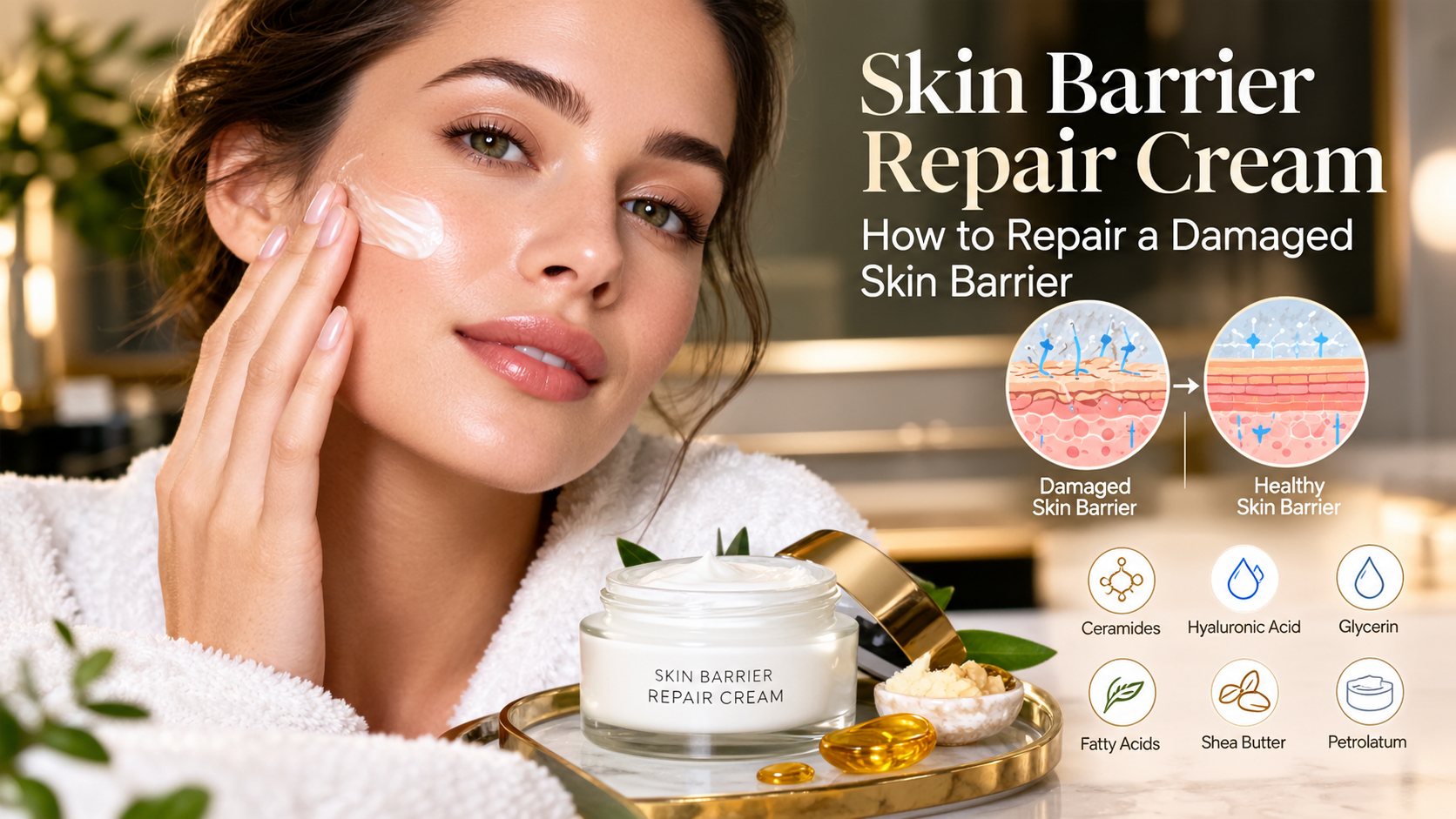
Skin Barrier Repair Cream: How to Repair a Damaged Skin Barrier
A skin barrier repair cream can help support dry, sensitive, and irritated skin by providing hydration and ingredients that help protect the skin’s natural barrier. If your face suddenly feels tight, flaky, rough, red, or unusually sensitive, your skincare routine may need a simpler approach focused on moisture and barrier support. For a complete approach to your overall beauty routine, you can also explore our guide to personalized hair care.
The skin barrier is the outermost protective layer of your skin. It helps keep moisture inside while protecting your skin from environmental irritants. When that barrier becomes weakened, products that normally feel comfortable may suddenly sting, and even basic cleansing can leave your face feeling uncomfortable. Once your skincare routine is balanced, you can also explore our latest teal nails ideas for a polished beauty look.
A barrier-focused moisturizer can provide hydration and replenish some of the lipids and moisturizing components that support the outer layer of skin. Ingredients such as ceramides, glycerin, hyaluronic acid, fatty acids, and other moisturizing agents are commonly used in products designed for dry or sensitive skin.
The good news is that supporting your skin barrier does not have to mean buying a dozen new products. In many cases, a gentle cleanser, a suitable skin barrier repair cream, and daily sunscreen can provide a simple foundation for a more comfortable skincare routine.
What Is the Skin Barrier?
The skin barrier is primarily associated with the outer layer of the skin, called the stratum corneum. It contains skin cells along with lipids such as ceramides, cholesterol, and fatty acids.
Think of it like a carefully constructed wall. The skin cells act somewhat like bricks, while lipids help fill the spaces between them.
This structure helps reduce excessive water loss and provides protection against outside irritants. When the barrier is functioning properly, your skin generally feels comfortable and hydrated. When it becomes disrupted, moisture can escape more easily, leaving the skin dry and more reactive.
That is why barrier care is more than a skincare trend. It is about supporting one of the skin’s most important natural protective functions.
 What Is a Skin Barrier Repair Cream?
A skin barrier repair cream is a moisturizer formulated to provide hydration while supporting the skin’s protective outer layer.
These creams often contain ingredients such as:
- Ceramides
- Glycerin
- Hyaluronic acid
- Fatty acids
- Cholesterol
- Shea butter
- Dimethicone
- Petrolatum
- Other emollient or occlusive ingredients
The exact formula varies from product to product.
Ceramides are especially popular in barrier-focused skincare because they are naturally occurring lipids in the skin. A well-formulated barrier cream does not necessarily need to feel extremely heavy to be useful. The ideal texture depends on your skin type, climate, personal preference, and how dry or sensitive your skin feels.
Signs You May Need a Skin Barrier Repair Cream
There is no single symptom that proves your skin barrier is damaged, but several signs can suggest that your skin is struggling.
You may notice:
- Persistent dryness
- Flaking
- Rough texture
- Tightness after cleansing
- Redness
- Increased sensitivity
- Stinging when applying skincare products
- Itching
- Tender or uncomfortable skin
- Dry patches that keep returning
If your skin suddenly reacts to products that you have used comfortably for months, simplifying your routine may be more helpful than adding stronger treatments.
However, these symptoms can also occur with conditions such as eczema, dermatitis, allergies, or other skin problems. Persistent redness, itching, pain, cracking, or irritation deserves professional medical attention.
What Causes Skin Barrier Damage?
Your skin barrier can become stressed for many different reasons.
Over-Exfoliating
Exfoliation can help improve the appearance of dull or uneven skin, but more is not always better.
Using exfoliating acids, scrubs, peels, or other strong treatments too frequently can leave already-sensitive skin feeling dry and irritated.
If your skin is burning or stinging, temporarily reducing aggressive exfoliation may be more sensible than adding another active ingredient.
Harsh Cleansers
Some cleansers can leave the skin feeling extremely tight after washing.
That tight, squeaky-clean feeling is not necessarily a sign that your cleanser is working better. For dry or sensitive skin, a gentle cleanser may be more appropriate.
Hot Water
A long, very hot shower may feel relaxing, but hot water can contribute to dryness.
Warm or lukewarm water is generally a better choice when your skin is already dry or irritated.
Dry Weather
Cold temperatures, low humidity, indoor heating, and dry air can all make moisture retention more challenging.
This is one reason many people notice increased dryness during winter.
Too Many Active Ingredients
Retinol, exfoliating acids, acne treatments, vitamin C, and other active ingredients can have a place in a skincare routine.
The problem can come from combining too many potentially irritating products or using them too frequently.
Sometimes the best move is to simplify your routine and allow your skin to settle.
Key Ingredients in a Skin Barrier Repair Cream

Choosing a barrier cream can feel confusing because skincare labels are packed with ingredient names.
Here are some of the most useful categories to understand.
Ceramides for Skin Barrier Support
Ceramides are one of the most recognizable ingredients in barrier-focused moisturizers.
They are naturally present in the skin and help support the lipid structure of the outer barrier.
When shopping, you may see names such as:
- Ceramide NP
- Ceramide AP
- Ceramide EOS
The formula as a whole matters, so do not assume that a product is automatically better simply because it lists ceramides.
Glycerin
Glycerin is a humectant, meaning it helps attract and hold water.
It is commonly used in moisturizers because it can help skin feel softer and more hydrated.
Hyaluronic Acid
Hyaluronic acid is another popular humectant.
It helps support skin hydration and can work particularly well when paired with ingredients that help prevent moisture from escaping.
Petrolatum
Petrolatum is an occlusive ingredient that helps reduce water loss from the skin.
It can be particularly useful when the skin is extremely dry.
Dimethicone
Dimethicone is another moisturizing ingredient that can help form a protective layer over the skin.
It is often found in creams designed for dry or sensitive skin.
Shea Butter
Shea butter is an emollient ingredient that can help soften dry, rough skin.
It is especially common in richer creams intended for dry skin.
How to Choose the Right Skin Barrier Repair Cream
Not every skin type needs the same texture.
Skin Barrier Cream for Dry Skin
If your skin feels tight, flaky, or rough, consider a richer cream containing ingredients such as ceramides, glycerin, shea butter, or petrolatum.
A thicker cream may feel more comfortable at night.
Skin Barrier Cream for Sensitive Skin
If your skin reacts easily, look for a simple formula.
Fragrance-free products can be a useful choice because fragrance may irritate sensitive or dry skin.
Skin Barrier Cream for Oily Skin
Oily skin can still become dehydrated.
Instead of automatically choosing a heavy cream, consider a lightweight lotion or gel-cream containing hydrating ingredients.
Look for products labeled non-comedogenic if you are concerned about clogged pores.
Skin Barrier Cream for Combination Skin
Combination skin often benefits from a flexible approach.
You may prefer a lightweight moisturizer across most of your face and a richer barrier cream only on dry areas.
How to Use a Skin Barrier Repair Cream
The application method is simple.
Step 1: Cleanse Gently
Wash your face with a gentle cleanser and lukewarm water.
Avoid scrubbing aggressively.
Step 2: Leave Skin Slightly Damp
You do not need to completely dry your face before moisturizing.
Applying moisturizer while the skin is slightly damp can help trap moisture.
Step 3: Apply Your Skin Barrier Repair Cream
Use a comfortable amount and spread it gently over your face.
There is no need to aggressively massage irritated skin.
Step 4: Apply Sunscreen in the Morning
During the daytime, finish with a broad-spectrum sunscreen with SPF 30 or higher.
A Simple Skin Barrier Repair Cream Routine
If your skin feels overwhelmed, simplicity can be helpful.
Morning Routine
- Gentle cleanser, if needed
- Hydrating serum, optional
- Skin barrier repair cream
- Broad-spectrum SPF 30+
Evening Routine
- Gentle cleanser
- Hydrating serum, optional
- Skin barrier repair cream
If your skin is very irritated, you may want to temporarily reduce unnecessary active ingredients.
Once your skin feels comfortable again, you can gradually reintroduce other products.
What Should You Avoid While Repairing Your Skin Barrier?

When your barrier feels compromised, your skincare routine may need a temporary reset.
Consider reducing or avoiding:
- Harsh facial scrubs
- Very hot water
- Strong exfoliating acids
- Excessive exfoliation
- Strongly fragranced products
- Alcohol-heavy products that irritate your skin
- Picking or scratching dry patches
- Introducing several new products at once
The goal is not to stop every skincare ingredient forever. Instead, give your skin a calmer environment and gradually build your routine back up.
Can Skin Barrier Repair Cream Help Acne-Prone Skin?
Yes, acne-prone skin can still need barrier support.
Some acne routines can leave the skin feeling dry or irritated, especially when multiple treatments are used together.
Look for a lightweight, non-comedogenic moisturizer if you are prone to clogged pores. Avoid assuming that every rich cream will cause acne, but pay attention to how your own skin responds.
Hydration and acne care do not have to be opposites.
Can You Use Skin Barrier Repair Cream With Retinol?
You often can, but your skin’s tolerance matters.
Retinol can be irritating, particularly when someone is new to it or uses it too frequently.
One approach is to apply moisturizer before or after retinol, depending on your routine and how sensitive your skin is.
If your skin is already burning, peeling, or significantly irritated, it may be better to pause irritating actives and focus on gentle cleansing and moisturizing until your skin settles.
If you are using prescription retinoids or treating a diagnosed skin condition, follow your healthcare professional’s instructions.
How Long Does Skin Barrier Repair Take?
There is no universal timeline.
Mild dryness may improve relatively quickly after you remove an irritating product and consistently moisturize. More significant irritation can take longer.
Your results depend on the cause of the problem, your skin type, the products you use, and whether an underlying condition is involved.
Instead of looking for overnight transformation, focus on consistent habits:
- Gentle cleansing
- Regular moisturizing
- Avoiding unnecessary irritation
- Wearing sunscreen
- Maintaining a simple routine
Consistency is much more useful than constantly changing products.
Skin Barrier Repair Cream vs. Regular Moisturizer

A regular moisturizer can absolutely support the skin barrier.
The difference is usually in the formula and marketing focus.
A barrier-focused cream often emphasizes ingredients such as ceramides, fatty acids, cholesterol, humectants, emollients, or occlusives.
That does not automatically make it better than every ordinary moisturizer.
The right product is the one that gives your skin enough hydration without causing irritation or feeling uncomfortable.
Common Skin Barrier Repair Mistakes
Mistake 1: Buying Too Many Products
When your skin looks irritated, it can be tempting to buy a complete new routine.
That may actually make it harder to determine what is causing the problem.
Start with the basics.
Mistake 2: Exfoliating Flaky Skin
Flaking does not always mean your skin needs exfoliation.
If the skin is already irritated, additional exfoliation may make the problem worse.
Mistake 3: Using a Fragranced Product Because It Smells Good
A pleasant fragrance does not necessarily mean a product is better for your skin.
For sensitive or dry skin, fragrance-free formulas may be a useful starting point.
Mistake 4: Expecting Instant Results
A damaged or irritated barrier needs time and consistency.
Do not judge a product solely by how your skin looks the next morning.
Mistake 5: Forgetting Sunscreen
Barrier care does not stop at moisturizer.
Daily sun protection remains an important part of maintaining healthy-looking skin.
When Should You See a Dermatologist?
A skincare routine can help ordinary dryness, but not every skin problem is simply a damaged barrier.
Consider seeing a dermatologist if you have:
- Persistent redness
- Severe itching
- Painful or cracked skin
- Oozing or crusting
- Repeated flare-ups
- Significant swelling
- A rash that does not improve
- Symptoms that keep getting worse
Conditions such as eczema and dermatitis can cause symptoms that resemble ordinary dryness and may require specific treatment.
Final Thoughts on Skin Barrier Repair Cream

A skin barrier repair cream can be a useful addition to a skincare routine when your skin feels dry, tight, sensitive, or uncomfortable. Look for a formula that supports hydration and contains ingredients such as ceramides, glycerin, hyaluronic acid, fatty acids, or other emollient and occlusive ingredients. Just as importantly, avoid overwhelming your skin with too many active products at once.
The healthiest-looking skin routine is not necessarily the longest one.
For many people, the foundation is surprisingly simple: cleanse gently, moisturize consistently, avoid unnecessary irritation, and protect your skin from the sun.
If your skin continues to burn, itch, crack, or become increasingly red despite simplifying your routine, do not assume you simply need a stronger cream. A dermatologist can help determine whether an underlying skin condition is responsible.
Your skin barrier does a lot of work every day. Giving it the right support can help your skincare routine feel more comfortable, balanced, and sustainable.